
Health 17 min read
Plant-Based Eating and Your Gut: Easing Bloating, Gas, and Reflux Without Backfiring
More plants and less meat and dairy really can settle bloating, gas, and heartburn. The catch is that rushing it can do the opposite for a couple of weeks, so here is how to make the switch the way that actually helps.
This article is educational, not medical advice. It summarizes published research about populations, which is not a prescription for you. Talk to a clinician before changing your diet to manage a health condition.
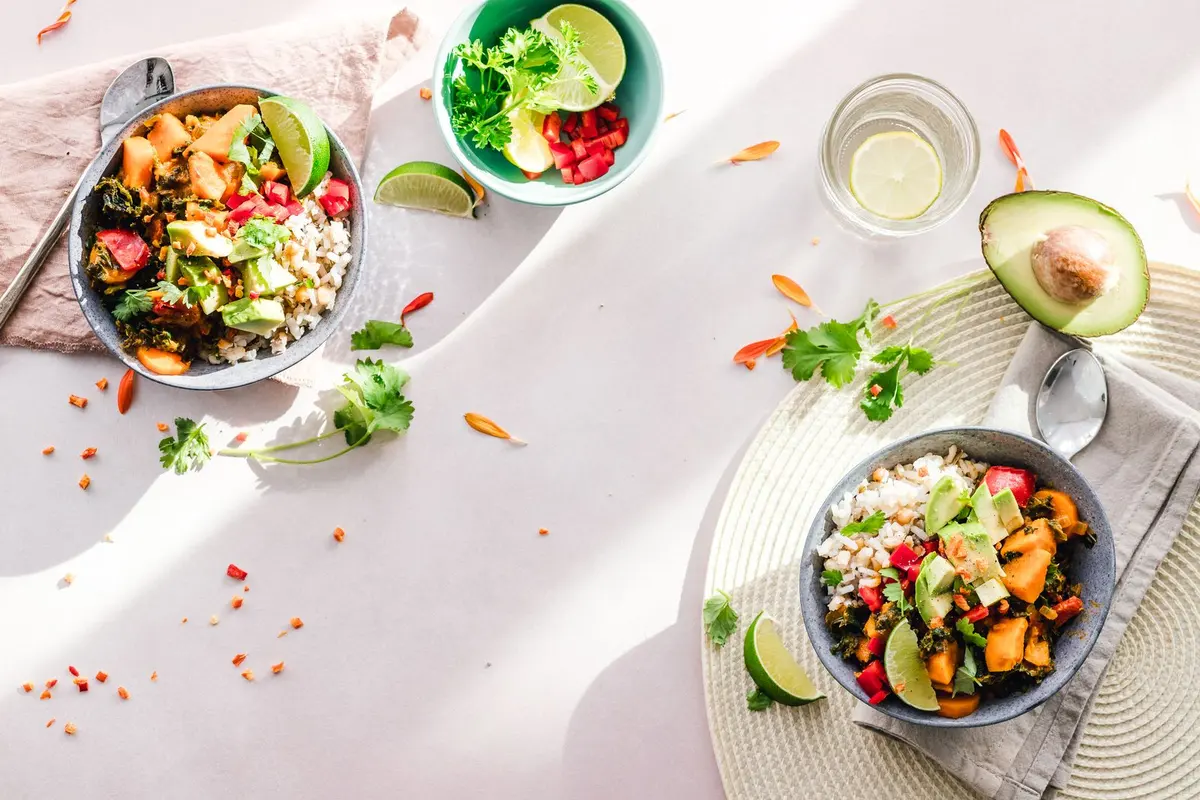
If someone you care about is bloated after dinner, gassy by the afternoon, or burping up acid at night, eating more plants is one of the most promising things they can try. It is also one of the easiest things to get wrong in the first two weeks. This is the honest version of the advice: what the evidence actually shows about meat, dairy, fiber, and your gut, why a rushed switch can backfire, how long to give it before you judge the results, and how to track down the one or two foods still causing trouble if it does not all clear up on its own. We have tried to make it easy to digest. Pun fully intended.
The short version
If you want the gist before the detail:
- Dropping meat and dairy genuinely calms a lot of guts. Dairy is the most common single trigger, and the problem is bigger than lactose, so going lactose-free is often only half a fix.
- More plants is the goal, but more fiber overnight is the mistake. A sudden jump can leave you bloated and gassy for a week or two while your gut bacteria catch up. That phase is temporary and it is a good sign, not a reason to quit.
- Vegan does not mean gentle. Chips, sugar, soda, and a pile of raw onions and beans are all plant-based and all hard on a touchy gut. Quality and pace matter more than the label.
- For heartburn, when and how much you eat matters as much as what. Smaller, lighter, earlier meals beat almost any single food rule.
- Give it three to four weeks, not three days. If it still is not settled after that, the back half of this guide shows you how to isolate the culprit.
Why meat and dairy can sit heavy
The same number of calories can land in your gut very differently depending on where they come from. Three things change when a plate goes from meat-and-dairy to plant-forward, and all three tend to point the same way.
The dairy problem is bigger than lactose
Dairy is the first thing to suspect, because so many people cannot fully digest it. About 65% of the world's population loses much of its ability to break down lactose after early childhood, ranging from roughly 5% of people of Northern European descent to 70 to 100% of people of East Asian descent (NIH MedlinePlus 2024). For all of them, milk, soft cheese, and ice cream can mean gas, cramping, and loose stools.
Here is the part that catches people who already buy lactose-free milk or take a Lactaid pill and still feel off: lactose may not be your only problem. A lactase pill only breaks down the sugar. It does nothing about the protein. In a randomized trial of 600 adults with milk intolerance, milk containing only the A2 type of casein caused significantly less bloating, abdominal pain, and loose stool than ordinary milk, and the benefit held up even in people who could digest lactose perfectly well (He et al. 2017). In other words, for a lot of people the trigger is the A1 casein protein, not just the sugar, and lactose-free dairy still contains that protein. Plant milk has neither. If you went lactose-free and only half-fixed the problem, this is the likely reason, and it is covered in more depth in the vegan milk guide.
The "acid" question, answered honestly
You have probably heard that meat creates an acidic environment in the body. It is worth separating two different ideas that often get blurred together, because one is solid and one is oversold.
The first is dietary acid load, a whole-body measure. Protein-rich animal foods like meat, fish, hard cheese, and eggs are acid-forming when your body processes them, while fruits and vegetables are alkaline-forming (Remer and Manz 1995). That part is well established. The honest caveat is that this measure is best studied for its long-term effects on the kidneys and bones, not for the bloated, acidic feeling after a meal, so treat it as one reason among several to lean plant-forward rather than the whole story.
The second is heartburn and reflux, the burning kind. This one is not really about how acidic a food is. It is about a large, heavy, fatty meal relaxing the valve at the top of the stomach and slowing how fast the stomach empties, which lets acid wash back up (Kaltenbach et al. 2006). Meat-heavy meals tend to be exactly that: bigger and fattier. That is the more direct reason a steak dinner can leave you feeling acidic and overfull, and it is why the fix is as much about portion size and timing as about any one ingredient. More on that below.
The payoff for going plant-forward is real and measurable. In a study of 184 people with throat-reflux symptoms, a 90 to 95% plant-based Mediterranean diet with alkaline water worked as well as proton pump inhibitor drugs, the standard prescription: 62.6% improved on the diet versus 54.1% on the medication (Zalvan et al. 2017). A diet matching a drug is about as strong as nutrition evidence gets.
Why eating more plants can backfire at first
Here is the trap that makes people give up in week one. They hear "eat more fiber," go from a low-fiber diet to a mountain of beans, broccoli, and bran overnight, feel worse than ever, and conclude that plants do not agree with them. What actually happened is more hopeful than that.
Your body cannot break down most fiber on its own. Your gut bacteria do it for you, by fermenting it, and gas is a normal byproduct of that fermentation. When you suddenly hand those bacteria far more fiber than they are used to, you get more gas until the population adjusts. And it does adjust. When researchers fed people a daily serving of beans, about half reported more gas in the first week, but among those who noticed it, 70% or more felt it fade by the second or third week of steady eating (Winham and Hutchins 2011).
The shift underneath that is fast. Switching the kind of food you eat changes which bacteria dominate your gut within about a day (David et al. 2014). A plant-based pattern feeds the fiber-fermenting microbes; an animal-based one feeds bile-tolerant species, including some linked to inflammation. The bloating of week one is the sound of that community reshuffling. The move that prevents most of it is simple: ramp up, do not leap. Add a little more fiber every few days, drink more water as you do, and your gut gets the weeks it needs to keep up.
The payoff is worth the short adjustment. The people who eat the most fiber, nearly all of it from whole plants, have lower rates of heart disease, stroke, type 2 diabetes, and colorectal cancer (Reynolds et al. 2019). The few uncomfortable days are the toll on the way to that.
Not all plant food is gut food
"Plant-based" is not a synonym for "easy to digest." French fries, sugary drinks, white bread, and candy are all plant-based, and a diet built on them is rough on your gut and the rest of you. The largest study to test this scored about 209,000 adults on how plant-based their diets were and on the quality of those plants. Diets built on whole foods, vegetables, whole grains, legumes, nuts, and fruit lowered disease risk; diets heavy in refined grains, sugary drinks, and processed snacks did not (Satija et al. 2017). The takeaway for your stomach is the same as for your heart: it is the whole plant foods doing the work, not the absence of meat.
A few specific traps are worth naming, because they catch new plant eaters constantly:
- Sugar and sugar alcohols. A big load of sugar feeds gas-producing bacteria, and the sugar alcohols in "no sugar added" gum, mints, and protein bars (sorbitol, xylitol, mannitol) are famous for bloating and loose stools. Vegan junk food is still junk food.
- The wrong kind of fiber, too fast. Fiber comes in two broad types, and they behave differently. When researchers pooled 14 trials in people with irritable bowel syndrome, the benefit came almost entirely from soluble fiber, the gel-forming kind in oats and psyllium, while insoluble wheat bran did not help and sometimes made bloating worse (Moayyedi et al. 2014). If your gut is sensitive, lead with soluble fiber and add the coarse stuff slowly.
- The gassier vegetables, all at once. Onion, garlic, beans, and the cabbage family are wonderful foods that happen to be high in the fermentable carbs that produce the most gas. They are worth eating. They are not worth quadrupling overnight.
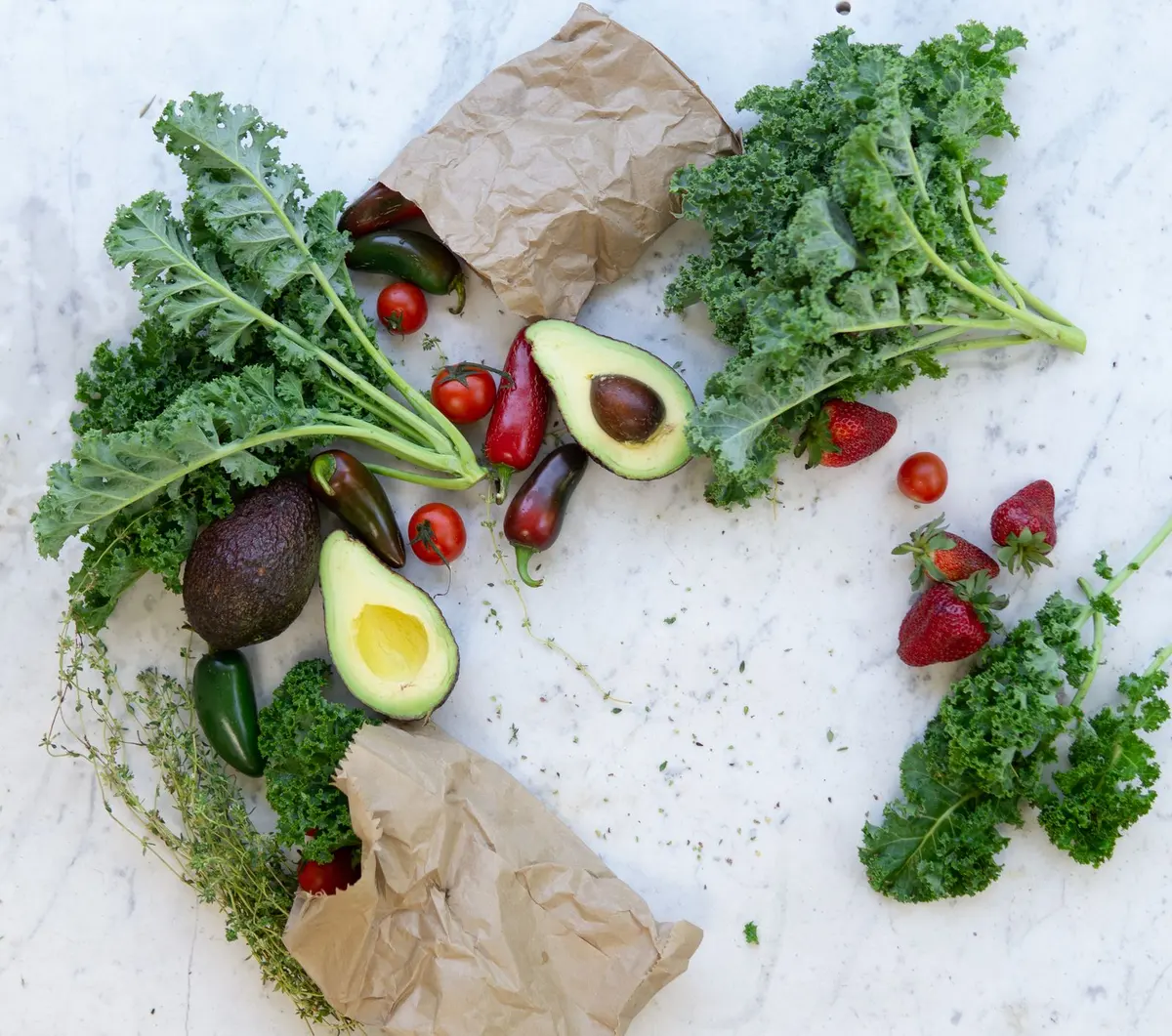
None of the foods on the right are bad. The point is the order of operations: build a base of gentle, soluble-fiber foods, then fold in the gassier ones a little at a time so your gut adapts instead of revolting.
Heartburn and reflux: what and when to eat
If the main symptom is burning, regurgitation, or that sour taste at the back of the throat, the most useful advice is not a list of forbidden foods. It is a change in size and timing.
When researchers reviewed the lifestyle measures for reflux, the ones with real supporting evidence were losing excess weight, raising the head of the bed, and leaving two to three hours between the last meal and lying down (Kaltenbach et al. 2006). The classic trigger foods, coffee, chocolate, fatty food, citrus, and the like, do relax the valve in lab studies, but the proof that cutting them out reliably improves symptoms is much weaker. That does not mean they are innocent. It means they are personal. Some people clearly react to coffee or tomato sauce, especially in the evening, and many do not. So test them on yourself rather than fearing all of them.
The single worst pattern is the easiest to fix: a big, fatty meal late at night, followed by lying down. That combination loads the stomach right when gravity stops helping you. Shift the largest meal earlier, make the evening meal smaller and lower in fat, and keep the known evening triggers light. For a lot of people that one change does more than any pill. And the plant-forward direction helps here too, since plant meals tend to be lighter and lower in fat to begin with, which is part of why the diet in the Zalvan trial held its own against medication.
Be patient: how long this really takes
This is the part to say out loud to anyone you are encouraging, because it is where most people quit too early. Your gut is not a light switch. The bacteria shift within a day, but the symptoms they drive can take weeks to settle into a new normal, and the bean studies put real numbers on it: the gas of week one was mostly gone by week two or three (Winham and Hutchins 2011). A fair trial is three to four weeks of eating consistently, not a long weekend.
Search any reflux or IBS forum and the stories line up with that range, with a wide spread. Plenty of people describe cutting dairy or meat and feeling lighter within days. Others say it took a month or two before the bloating truly lifted. And some found that plants alone were not the whole answer and they had to keep digging, which is exactly what the next section is for. Those accounts are encouraging, but they are anecdotes, not proof, and they cut both ways: a few people feel worse at first, almost always because they jumped to a high-fiber diet overnight, which is the one mistake this guide is built to prevent. The pattern worth copying from the people who succeed is not their speed. It is their patience.
Still bloated? How to find the culprit
Suppose it has been a month, you are eating mostly whole plant foods, you ramped your fiber up sensibly, and something still is not right. Now you stop guessing and start testing. The goal is to isolate the specific food or two that your gut objects to, and there is a proven method for it.
Keep a simple food and symptom diary for a week or two. Write down what you eat and when, and rate bloating, gas, pain, or reflux a few hours later and the next morning. Patterns that are invisible day to day often jump out on paper. Carbonation, coffee, a particular fruit, or that evening square of chocolate can reveal itself fast.
Then run a structured elimination, not a random one. The most evidence-backed approach is the low-FODMAP method, which temporarily removes the fermentable carbs that most often cause gas and bloating, then adds them back one group at a time to see which ones you actually react to. In a controlled trial, this approach roughly halved gut-symptom scores in people with IBS (Halmos et al. 2014). Two things make it work and keep it safe:
- It is a diagnostic, not a diet. Many high-FODMAP foods, onion, garlic, wheat, certain beans and fruits, are healthy plants you want back. The point of pulling them is to reintroduce them methodically and keep the ones you tolerate, not to live without them.
- It is worth doing with a dietitian. A short, strict elimination followed by careful reintroduction is easy to get wrong on your own, and a registered dietitian makes it faster and more reliable. The wider point that a well-planned plant-based diet is nutritionally complete is the official position of the Academy of Nutrition and Dietetics (Melina et al. 2016), and a dietitian helps you keep it that way while you experiment.
A few single suspects are worth testing one at a time even before a full elimination: any dairy still sneaking in, wheat and gluten, onion and garlic, beans, sugar alcohols, and carbonated drinks. Change one thing for a week, watch what happens, and you learn more than from changing five things at once.
One more thing, and it matters. Most bloating and reflux is benign and diet-related, but some symptoms are not. See a doctor rather than self-experimenting if there is blood in the stool, unexplained weight loss, trouble or pain when swallowing, persistent vomiting, symptoms that wake you at night, or new digestive trouble after about age 50. A plant-based diet is a reasonable thing to try for everyday bloating. It is not a substitute for getting an alarming symptom checked.
Your first two weeks
If you want a plan to hand someone, this is it:
- Cut the obvious dairy first. Swap milk for an unsweetened plant milk and see how the next week feels. It is the highest-odds single change.
- Add plants gradually, starting soluble. Oats, bananas, carrots, potatoes, tofu, and smooth nut butters are gentle. Increase fiber a little every few days and drink more water with it.
- Make dinner smaller, earlier, and lighter, and leave a few hours before lying down. This is the biggest lever for reflux.
- Skip the vegan junk for now. Go easy on soda, sweets, sugar alcohols, and fried food while your gut resets.
- Give it three to four weeks before you judge it, and keep a quick diary so you can spot patterns.
- If it still is not right, run a structured elimination, ideally with a dietitian, and check any red-flag symptoms with a doctor.
The honest promise is not that plants fix every gut instantly. It is that eating more whole plants and less meat and dairy moves the odds strongly in your favor, that the rough first week is usually a sign it is working rather than a reason to stop, and that if something still bothers you, there is a clear way to find it.
Where to go next
If dairy is the first thing you are cutting, the vegan milk guide covers which plant milk to choose and why dropping dairy can calm your gut even if you already take Lactaid, and the coffee creamer guide handles the splash in your morning cup. To build meals that are filling without leaning on meat, see where vegans get protein and the beginner's guide to going vegan. And if you want to know which vegan foods are everyday staples versus occasional treats, the everyday-to-treat scale sorts them out, which is the same instinct that keeps a gut reset on track.
Sources for this article
-
Diet rapidly and reproducibly alters the human gut microbiome
David, L. A., Maurice, C. F., Carmody, R. N., et al. (2014), Nature.
Read the study · In our library (with every article citing it) -
Lactose intolerance
MedlinePlus Genetics, National Library of Medicine (2024), National Institutes of Health.
Read the reference · In our library (with every article citing it) -
Effects of cow's milk beta-casein variants on symptoms of milk intolerance in Chinese adults: a multicentre, randomised controlled study
He, M., Sun, J., Jiang, Z. Q. & Yang, Y. X. (2017), Nutrition Journal.
Read the study · In our library (with every article citing it) -
Potential renal acid load of foods and its influence on urine pH
Remer, T. & Manz, F. (1995), Journal of the American Dietetic Association.
Read the study · In our library (with every article citing it) -
Are lifestyle measures effective in patients with gastroesophageal reflux disease? An evidence-based approach
Kaltenbach, T., Crockett, S. & Gerson, L. B. (2006), Archives of Internal Medicine.
Read the study · In our library (with every article citing it) -
A comparison of alkaline water and Mediterranean diet vs proton pump inhibition for treatment of laryngopharyngeal reflux
Zalvan, C. H., Hu, S., Greenberg, B. & Geliebter, J. (2017), JAMA Otolaryngology–Head & Neck Surgery.
Read the study · In our library (with every article citing it) -
Perceptions of flatulence from bean consumption among adults in 3 feeding studies
Winham, D. M. & Hutchins, A. M. (2011), Nutrition Journal.
Read the study · In our library (with every article citing it) -
The effect of fiber supplementation on irritable bowel syndrome: a systematic review and meta-analysis
Moayyedi, P., Quigley, E. M. M., Lacy, B. E., et al. (2014), American Journal of Gastroenterology.
Read the study · In our library (with every article citing it) -
Healthful and Unhealthful Plant-Based Diets and the Risk of Coronary Heart Disease in US Adults
Satija, A., et al. (2017), Journal of the American College of Cardiology.
Read the study · In our library (with every article citing it) -
A diet low in FODMAPs reduces symptoms of irritable bowel syndrome
Halmos, E. P., Power, V. A., Shepherd, S. J., Gibson, P. R. & Muir, J. G. (2014), Gastroenterology.
Read the study · In our library (with every article citing it) -
Carbohydrate quality and human health: a series of systematic reviews and meta-analyses
Reynolds, A., et al. (2019), The Lancet.
Read the study · In our library (with every article citing it) -
Position of the Academy of Nutrition and Dietetics: Vegetarian Diets
Melina, V., Craig, W. & Levin, S. (2016), Journal of the Academy of Nutrition and Dietetics.
Read the position · In our library (with every article citing it)