
Health 13 min read
Where Vegans Get Protein: A Complete Answer
Protein is the first thing people ask vegans about. The honest answer is that it is one of the easier parts to get right.
This article is educational, not medical advice. It summarizes published research about populations, which is not a prescription for you. Talk to a clinician before changing your diet to manage a health condition.
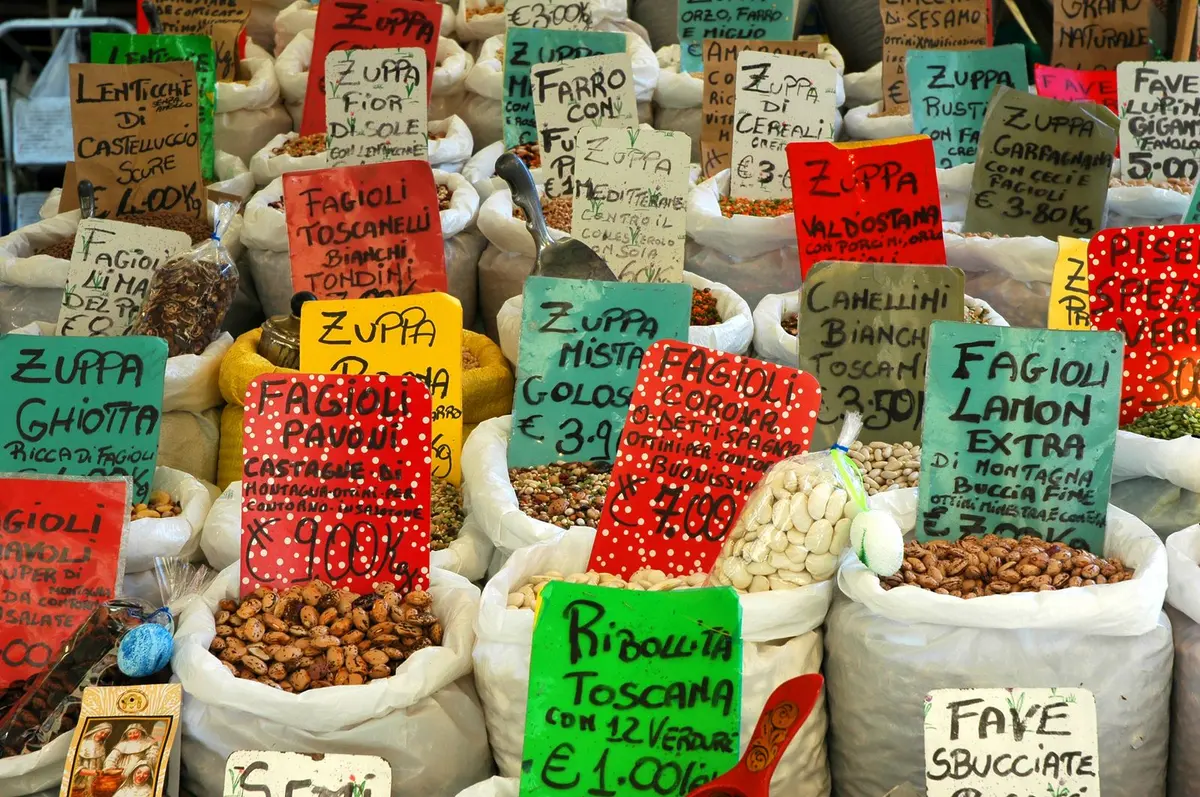
"Where do you get your protein?" is the question every vegan hears first. It is worth taking seriously, because protein does matter. It is also worth answering plainly, because the worry is mostly larger than the problem.
How much protein you actually need
The official baseline is about 0.8 grams of protein per kilogram of body weight per day for an average adult. For someone weighing 70 kg (about 154 lb), that works out to roughly 56 grams a day. For someone at 60 kg (about 132 lb), closer to 48 grams. This figure is the recommended intake meant to cover the needs of nearly everyone in good health, not a bare survival minimum.
Some people need more. Athletes building muscle, people doing heavy resistance training, and older adults trying to hold onto muscle mass are commonly advised to aim higher, often in the range of 1.2 to 2.0 grams per kilogram depending on the goal. Pregnancy and recovery from illness or injury also raise the requirement. If you are in one of those groups, plan for more; if you are a typical adult eating enough food, the baseline is the number that applies to you.
The Academy of Nutrition and Dietetics, the largest body of registered dietitians in the United States, reviewed the evidence and concluded that appropriately planned vegetarian and vegan diets are healthful and nutritionally adequate for all stages of life, including pregnancy, infancy, childhood, and for athletes (Academy of Nutrition and Dietetics 2016). The same position holds that plant protein meets needs when the diet supplies enough total calories and a reasonable variety of foods. That last condition is the one that does the work: when people fall short on protein, it is usually because they are short on calories overall, not because the protein came from plants.
The "complete protein" myth
For decades people were told that plant proteins are "incomplete" and that you had to combine specific foods, rice with beans, at the same meal to get all the essential amino acids. This idea traces back to a popular book from the 1970s whose author later walked the claim back. Mainstream nutrition has moved on, and so has the dietetics position.
Here is the actual picture. Your body keeps a circulating pool of amino acids and draws on it as needed. As long as you eat a normal variety of plant foods across the day, you get all nine essential amino acids in sufficient amounts. You do not need to engineer each plate. The Academy of Nutrition and Dietetics states directly that complementary proteins do not need to be eaten at the same meal, and that protein needs are met when intake is varied and calories are adequate (Academy of Nutrition and Dietetics 2016).
It is true that some plant foods are lower in particular amino acids. Most grains run a little low on lysine; most legumes run a little low on methionine. Eating from both groups over a day, which most people do without trying, covers the gap. Soy, by the way, contains all the essential amino acids in good proportion on its own, so tofu, tempeh, edamame, and soy milk are not even subject to the combining question.
The best plant protein sources
These are common, widely cited food amounts, the kind printed on packages and in standard nutrition references. Treat them as general food knowledge and round numbers, not precise lab values, since they vary by brand, variety, and preparation.
| Food | Typical serving | Protein (about) |
|---|---|---|
| Cooked lentils | 1 cup | 18 g |
| Tofu, firm | 1/2 cup | 10 to 20 g |
| Tempeh | 1/2 cup | 15 to 18 g |
| Seitan | 3 oz | 20 to 25 g |
| Edamame | 1 cup, shelled | 17 g |
| Chickpeas | 1 cup | 15 g |
| Black beans | 1 cup | 15 g |
| Soy milk | 1 cup | 7 to 9 g |
| Peanut butter | 2 tbsp | 8 g |
| Almonds | 1 oz | 6 g |
| Quinoa, cooked | 1 cup | 8 g |
| Oats, dry | 1/2 cup | 5 g |
A few things stand out from a table like this. Legumes do most of the heavy lifting: lentils, chickpeas, black beans, and soy foods all land in the same range as a serving of meat. Seitan, made from wheat gluten, is unusually protein-dense and is a favorite of people chasing higher numbers. Grains and nuts add steady smaller amounts that accumulate across the day, which is part of why total calories matter so much.
Put a realistic day together and the math is undramatic. Oatmeal with soy milk and peanut butter at breakfast, a lentil soup or a bean burrito at lunch, tofu stir-fry or a chickpea curry at dinner, and a handful of almonds as a snack will clear 60 to 80 grams without any special effort or powders. For most adults that is at or above the target. People with higher needs can add a scoop of soy or pea protein, more seitan, or simply larger portions of the foods above.
Building muscle on plants
People chasing muscle are the ones most likely to be told plants will not cut it, so this part is worth answering on its own. The short version is that plant protein builds muscle and strength just as well as animal protein, provided you eat enough of it.
Start with how much. A meta-analysis of 49 resistance-training trials covering 1,863 people found that more protein helped build muscle and strength only up to about 1.6 grams per kilogram of body weight per day. Beyond that, extra protein added nothing measurable. That puts the real ceiling for a dedicated lifter at roughly double the everyday baseline, not the huge numbers the supplement aisle implies. For a 70 kg lifter that is around 110 grams a day, which is very reachable from the foods in the table above.
Then the source of that protein. When researchers test it head to head, the plant-versus-animal gap disappears. A 12-week trial put habitual vegans and omnivores through the same supervised resistance training, with both groups eating a matched 1.6 grams per kilogram and the vegans leaning on soy protein. The two groups gained the same muscle size and the same strength. In the authors' words, an exclusively plant-based diet "is not different" from a mixed diet for building muscle and strength when protein is matched.
Recovery may even tilt toward plants. When researchers compared 27 vegan and 27 omnivore women after the same resistance workout, the vegans were significantly less sore 48 hours later across several muscle groups and held more grip strength right after training. It is a small, single-session study, so treat it as a hint rather than a verdict, but it points the same way as everything above: nothing about plant protein holds muscle repair back.
The amino acid worry fades here too. Plant proteins do run a little lower in leucine, the amino acid that signals the body to build muscle, but at these intakes healthy adults reach the same results anyway. This is partly why the Academy of Nutrition and Dietetics considers well-planned vegan diets appropriate for athletes, not just for general health, and why Olympic weightlifters and record-setting strongmen have competed at the top of their sports on plants. The bottleneck for muscle is training hard and eating enough total protein, not where the protein comes from.
B12: the real caveat, and the myth attached to it
If protein is the worry people bring to a plant-based diet, vitamin B12 is the one they should actually act on. It is the honest caveat to an otherwise easy story. It also comes wrapped in a myth, so it is worth separating the two.
Start with the fact most people have backwards: B12 does not really come from animals. It is made by bacteria, and animals are just a stop along the way. On a plant-based diet you get it directly instead, from a supplement or from fortified foods, which is the same vitamin by a cleaner route. The things sometimes sold as natural plant sources, like spirulina, unfortified nutritional yeast, and seaweed, do not deliver usable B12, a point the Academy of Nutrition and Dietetics states plainly.
Now the myth, which is that meat-eaters are covered and vegans are not. Both halves are shaky. When German researchers checked, vegans who supplemented had B12 status on par with omnivores, while it was the lacto-ovo-vegetarians, who supplement less often, who came up short. And eating meat is no guarantee: in the Framingham study of nearly 3,000 mostly meat-eating adults, about 39% had low-normal B12, and meat intake did nothing to protect their levels. What protected them was supplements and fortified foods. Absorption also drops with age, so plenty of older people run low whatever they eat, because the bottleneck is uptake, not how much animal product is on the plate.
So the usual gotcha lands backwards. B12 is not the vegan's weakness so much as everyone's blind spot, and the reliable fix is the one vegans already use on purpose: get it from a supplement or fortified foods instead of assuming a diet has it covered. The NIH puts the adult target at 2.4 micrograms a day. Because the body absorbs less from one big dose, the easy routes are a daily supplement or a larger dose a couple of times a week, plus fortified foods like plant milks and cereals. It costs a few cents a day, it closes the one common gap a plant-based diet creates, and a fair number of meat-eaters would do well to copy the habit.
What this means in practice
The protein question tends to evaporate once you look at the numbers on the plate. A diet that includes legumes most days, some soy foods, whole grains, and nuts or seeds covers protein for a typical adult and gives you the variety the dietetics position asks for. The two situations that call for more attention are higher athletic goals and very-low-calorie eating, and both are about getting enough food overall rather than about plants being deficient.
If you want a structured starting point, the getting started guide covers the wider set of nutrients worth planning for, and the 30-day meal plan lays out everyday meals that hit these protein ranges without anyone tracking grams. The short version: eat a normal variety of plant foods, eat enough of them, and the protein takes care of itself.
Sources for this article
-
Position of the Academy of Nutrition and Dietetics: Vegetarian Diets
Melina, V., Craig, W. & Levin, S. (2016), Journal of the Academy of Nutrition and Dietetics.
Read the position · In our library (with every article citing it) -
A systematic review, meta-analysis and meta-regression of the effect of protein supplementation on resistance training-induced gains in muscle mass and strength in healthy adults
Morton, R.W., et al. (2018), British Journal of Sports Medicine.
Read the study · In our library (with every article citing it) -
High-Protein Plant-Based Diet Versus a Protein-Matched Omnivorous Diet to Support Resistance Training Adaptations: A Comparison Between Habitual Vegans and Omnivores
Hevia-Larrain, V., et al. (2021), Sports Medicine.
Read the study · In our library (with every article citing it) -
Delayed Onset Muscle Soreness Following Acute Resistance Exercise in Untrained Females: A Comparative Study Between Vegans and Omnivores
Njeim, P., et al. (2024), International Journal of Sports Medicine.
Read the study · In our library (with every article citing it) -
Vitamin B12: Fact Sheet for Health Professionals
NIH Office of Dietary Supplements (2024), National Institutes of Health.
Read the reference · In our library (with every article citing it) -
Plasma vitamin B-12 concentrations relate to intake source in the Framingham Offspring study
Tucker, K.L., et al. (2000), The American Journal of Clinical Nutrition.
Read the study · In our library (with every article citing it) -
A cross-sectional study of nutritional status in healthy, young, physically-active German omnivores, vegetarians and vegans reveals adequate vitamin B12 status in supplemented vegans
Storz, M.A., et al. (2023), Annals of Medicine.
Read the study · In our library (with every article citing it)