
Food 15 min read
The Best Vegan Milk, by Taste, Health, and Price
Oat for coffee, soy or pea for protein, almond when you want it light. Which plant milk to buy, the flavors worth trying, and the science that makes the swap feel like an upgrade.
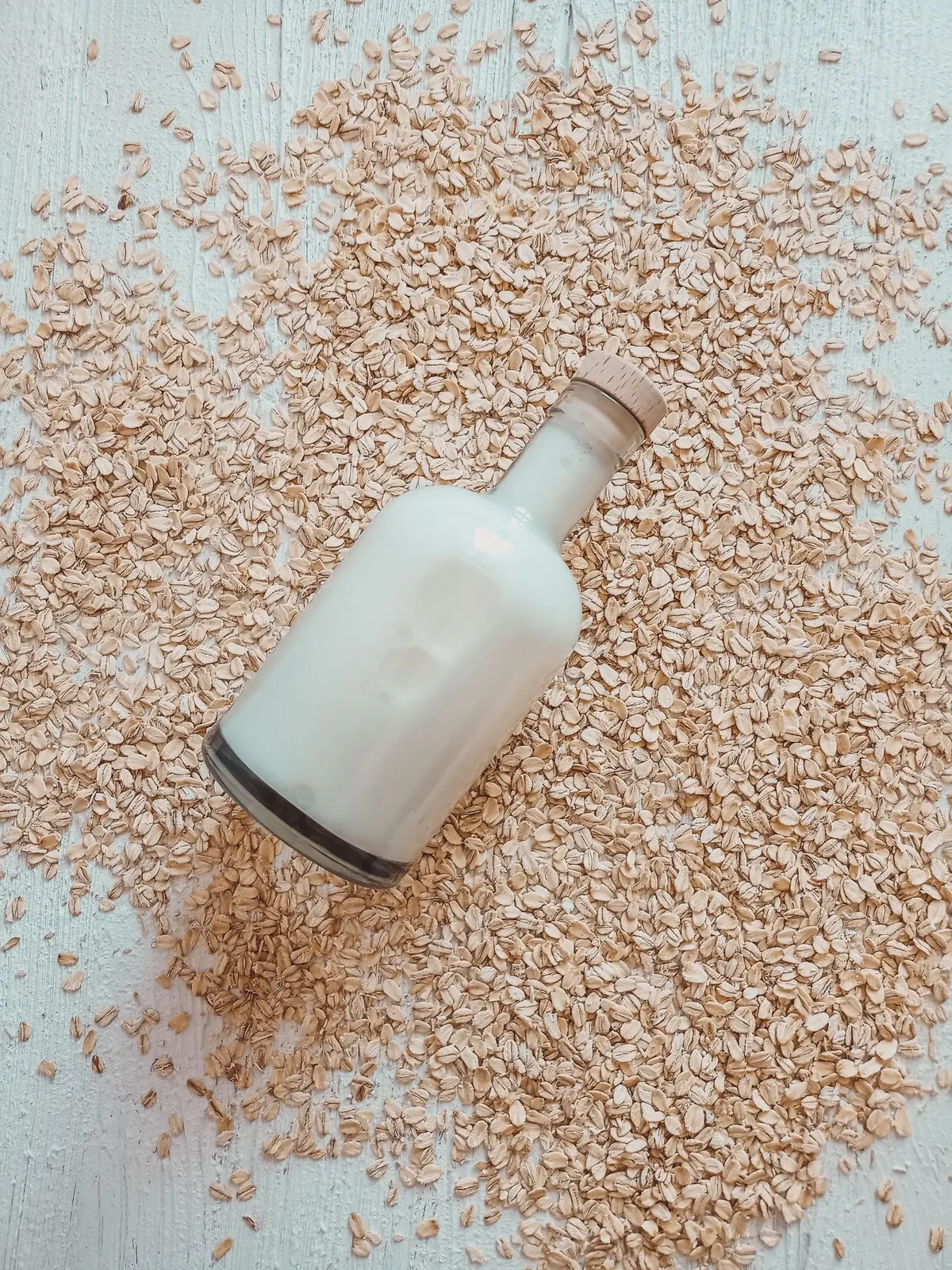
Switching to plant milk is the most satisfying swap in the kitchen, because a good one does everything dairy did and brings things dairy never could: no lactose, no cholesterol, a much lighter footprint, and, in soy's case, real benefits for your heart. The lineup has never been better either, from oat that froths like a barista's dream to pea milk with as much protein as a glass of dairy, with vanilla, chocolate, toasted coconut, and barista blends all on the shelf.
The one thing to know is that "plant milk" is not a single thing: oat behaves nothing like almond, and the right carton depends on whether you want it for coffee, cereal, baking, or just drinking. This guide sorts it out, with the best picks by taste, by health, and by price, the flavors each one comes in, and what actually changes in your body when you switch. One fact worth holding onto: a cup of dairy milk carries about 12 grams of sugar from lactose, so an unsweetened plant milk often has less sugar than the "plain" milk it replaces. Nothing here is sponsored, and every claim is linked to the science behind it.
Prefer paper? Download the printable Best Vegan Milk guide (PDF): a page per pick with the full nutrition label, the formats each line comes in, and where to buy. It pairs with the vegan coffee creamer guide.
The 10-second answer
If you want to stop reading and just buy something good:
- Best all-rounder, and best for coffee: oat milk. Creamy, naturally sweet, froths like dairy. Oatly and Chobani are the safe bets.
- Best for nutrition: unsweetened soy or pea milk. Both land near cow's milk on protein, around 7 to 8 grams a cup, which no other plant milk does.
- Best when you want it light: unsweetened almond or cashew, at roughly 30 to 40 calories a cup.
- Cheapest: store-brand soy or almond, often within pennies of dairy. Homemade oat milk is cheaper still.
- Best for baking: unsweetened soy or pea, because their protein browns and sets the way dairy does.
The rest of this guide is why, and the exceptions.
How the types compare
The single most useful thing to understand is that the type of plant decides almost everything: the protein, the calories, how creamy it is, and what it tastes like. Brand matters for polish; the plant matters for the basics.
Two patterns drive most decisions. Soy and pea are the protein milks, right up there with dairy. Oat is the comfort milk: the creamiest and most naturally sweet, which is why it took over coffee shops, and the one to reach for when you want flavor and froth. Everything else is a light, mild canvas that lets your coffee or cereal shine.
The eight picks at a glance
Every one of these is worth buying. The full rundown on each, by taste, health, and price, follows below.
What actually changes when you switch
This is the part most buying guides skip. Swapping milk is not just a flavor trade. There are two well-studied effects worth knowing about, and a pile of myths worth clearing out of the way.
Soy milk and your blood pressure
Soy is the one plant milk with a real cardiovascular track record, and it is stronger than most people expect. A meta-analysis of 17 randomized, double-blind, placebo-controlled trials found that soy intake lowered systolic blood pressure by about 1.7 mmHg and diastolic by about 1.3 mmHg on average (Mosallanezhad et al. 2021). Those are modest population averages, and the effect tends to be larger in people who start higher. A couple of mmHg sounds tiny, but spread across a population it is the kind of shift that moves heart-attack and stroke rates.
Soy does something similar for cholesterol. Pooling the 46 trials the FDA used to weigh its heart-health claim, a median 25 grams of soy protein a day lowered LDL, the harmful cholesterol, by about 3 to 4% (Blanco Mejia et al. 2019). That is the basis for the FDA-authorized claim that soy protein, as part of a low-saturated-fat diet, may reduce the risk of heart disease. Two cups of soy milk is roughly 14 to 16 grams of protein, most of the way to that 25-gram mark. No other plant milk has this kind of evidence behind it, which is the strongest single reason to make soy your default if heart health is the goal.
Dropping dairy and your gut, even if you take Lactaid
If milk makes you bloated, gassy, or worse, you probably blame lactose, and often you are right. About 65% of people worldwide lose much of their ability to digest lactose after infancy, from roughly 5% of people of Northern European descent to 70 to 100% of people of East Asian descent (NIH MedlinePlus 2024). For those people, plant milk removes the lactose entirely, which is why so many feel better within days of switching.
Here is the part that surprises people who already take Lactaid or buy lactose-free milk and still feel off: lactose may not be your only problem. A lactase pill only breaks down lactose. It does nothing about dairy protein. In a randomized crossover trial of 600 adults with milk intolerance, milk containing only A2 beta-casein caused significantly less bloating, abdominal pain, and loose stool than ordinary milk, and the benefit held up even in people who could digest lactose perfectly well (He et al. 2017). In other words, for some people the trigger is the A1 casein protein, not the sugar, and lactose-free dairy still contains that protein. Plant milk contains neither lactose nor casein, so it sidesteps both triggers at once. If you went lactose-free and only half-fixed the problem, this is the likely reason.
The soy myths, cleared up
Soy is the most slandered food in the supermarket, almost entirely on the basis of rodent studies and internet folklore. The human evidence is clear and reassuring.
- "Soy will lower a man's testosterone or feminize him." It will not. A meta-analysis of 41 clinical studies covering more than 1,700 men found that neither soy foods nor isoflavones changed testosterone or estrogen levels at any dose (Reed et al. 2021). The fear comes from soy's plant estrogens, which are chemically similar to human estrogen but behave differently in the body.
- "Soy causes breast cancer." The opposite, if anything. Across 12 studies of more than 37,000 women with breast cancer, soy intake was not harmful and was linked to lower recurrence (Qiu and Jiang 2019). Major cancer organizations now consider soy foods safe for survivors.
- "Soy wrecks your thyroid." Not in people with enough iodine. A comprehensive review of the human evidence found soy does not harm thyroid function in healthy people, with the only caveat that anyone with borderline thyroid function should make sure their iodine intake is adequate (Messina 2016).
None of this means you must drink soy. It means the reasons people avoid it are mostly wrong, and the reasons to choose it (protein, heart data, price) are mostly right.
Best by taste
Taste is personal, but blind tastings land on a consistent pecking order, and it starts with oat.
Oat is the crowd-pleaser. It is naturally creamy and a little sweet, the flavor people describe as the milk at the bottom of a bowl of cereal, and it froths better than any other plant milk. For drinking, pouring on cereal, and especially for coffee, it is the one most people like on the first sip. Oatly is the original barista benchmark; Chobani, Califia, and most store brands are close behind.
Soy, the older option, has quietly gotten much better. The grassy, beany flavor that put people off in the 1990s is mostly gone from modern unsweetened versions, which taste clean and neutral. Three Trees, Eden, and Westsoy make notably clean ones. Soy is the most versatile pick: creamy enough to enjoy, neutral enough to cook with, and the protein leader.
Almond and cashew are the light, mild options. Almond is thin and faintly nutty, better in smoothies, tea, and overnight oats than as a glass on its own. Cashew is a little creamier. Neither has much body, which some people prefer.
Pea (Ripple is the main brand) is surprisingly creamy and neutral, with no nutty or beany note, and it happens to carry the most protein of any common plant milk. It is the best pick for anyone avoiding soy and nuts at once.
Coconut (the carton kind, not canned) is rich with a mild tropical note. Lovely in chai or curries, more of an acquired taste poured on cereal.
For the sweet, dessert-like experience, the vanilla and "original" (sweetened) versions are the ones to drink. They shine in coffee and cereal. Save them for that, and keep an unsweetened carton for everything else.
Best for health
If nutrition is the priority, the decision is simple: unsweetened soy or pea milk, fortified. Both deliver about 7 to 8 grams of protein a cup, close to dairy's 8, while every other plant milk sits at 3 grams or less. They are also fortified with calcium, vitamin D, and usually B12 to match or beat dairy.
A good rule of thumb, adapted from the Center for Science in the Public Interest's plant-milk criteria, is to look for a carton with at least 7 grams of protein, at least 300 mg of calcium and 2.5 mcg of vitamin D, and no more than 5 grams of added sugar per cup. Soy and pea clear that bar; the rest clear it only on the fortification side.
A few specifics worth knowing:
- Choose unsweetened or "unsweet" as your everyday carton. Here is the comparison that matters: a cup of dairy milk already carries about 12 grams of sugar from lactose, so an unsweetened plant milk, with zero, has less sugar than the milk it replaces. A sweetened or vanilla carton adds about 7 grams a cup, which is your call. Keep an unsweetened one for every day and a sweetened one for a treat.
- Fortification is the whole game for the lighter milks. Almond and coconut bring little of their own, so the calcium, D, and B12 on the label is what you are actually buying them for. Shake the carton; the calcium settles.
- Vegans should make sure B12 is covered. Many plant milks are fortified, but B12 is the one nutrient a vegan diet cannot leave to chance, so confirm it on the label or take a supplement (NIH Office of Dietary Supplements). The wider point that a well-planned plant-based diet is nutritionally adequate is the official position of the Academy of Nutrition and Dietetics (Melina et al. 2016).
- Skip rice milk as a daily driver. It is the most allergy-friendly option, but it is watery, high in carbs, low in protein, and rice accumulates arsenic from soil and water, so it is a poor everyday choice, especially for kids.
- If you avoid additives, Elmhurst makes milks that are essentially nuts or grains and water, with no added gums. Most other brands use small amounts of gellan, xanthan, or locust bean gum for texture, which are well tolerated; the old carrageenan worry has largely been designed out of the category.
Best by price
Plant milk has a reputation for costing more than dairy, and the premium oat brands do. But the cheapest plant milks are competitive with cow's milk:
- Store-brand soy and almond are the value champions. Trader Joe's, Aldi, Great Value, and Costco's Kirkland organic soy routinely come in at or near the price of dairy per cup, and soy gives you the protein too.
- Shelf-stable cartons cost less than refrigerated and keep for months unopened, so they are the smart way to stockpile. The aseptic boxes in the center aisle are usually cheaper than the cold case.
- Barista and full-fat oat lines are the splurge. You are paying for the foam and the body, which is worth it if you make lattes and pointless if you pour it on cereal.
- Homemade oat milk is the cheapest of all: blend roughly one cup of rolled oats with four cups of cold water for under a minute, then strain. Use cold water and a short blend to avoid the gummy texture that hot, over-blended oats develop. It will not froth like the barista cartons, but for cereal and baking it costs a fraction of anything on the shelf.
The variations, decoded
Walk up to the oat milk and you will face five cartons from the same brand. Here is what the labels actually mean, using oat as the example because it has the most versions.
- Original / "Oatmilk": the standard, lightly sweetened version. Oatly Original runs about 120 calories with 7 grams of added sugar and 3 grams of protein a cup. The default for coffee and cereal.
- Unsweetened / plain: the same milk without the added sugar. Fewer calories, no sweetness, and the right choice for savory cooking and daily drinking.
- Barista / "Full Body": formulated to foam. These add a little oil and an acidity regulator so the milk steams into stable microfoam and resists curdling in hot coffee. Worth it if you froth; otherwise you are paying for a feature you will not use.
- Full-fat / Extra Creamy: richer, for people who want oat milk to feel like whole dairy. Oatly Full-Fat is about 160 calories with 9 grams of fat; Chobani Extra Creamy lands around 140 calories with 8 grams of fat. Delicious in coffee, heavier than you need on cereal.
- Vanilla: sweetened and flavored, effectively a dessert milk. Great in iced coffee and baking, too sweet for soup.
- Extra protein: soy-and-pea blends like Silk Protein push protein to around 10 grams a cup. The pick if you are using milk as a protein source.
The same logic applies across types. The decision tree is short: sweetened or vanilla for taste and treats, unsweetened or plain for health and cooking, barista or full-fat for coffee, extra-protein blends if you want milk to do nutritional work.
Cooking and baking with plant milk
<img src="/assets/img/photos/latte-pour-1200.webp" srcset="/assets/img/photos/latte-pour-480.webp 480w, /assets/img/photos/latte-pour-800.webp 800w, /assets/img/photos/latte-pour-1200.webp 1200w, /assets/img/photos/latte-pour-1600.webp 1600w" sizes="(max-width: 800px) 100vw, 720px" width="1200" height="1800" alt="Steamed milk being poured into a cup of coffee to make latte art." loading="lazy" decoding="async"
Most recipes take plant milk as a straight one-to-one swap for dairy. The two things to get right are sweetness and protein.
Use unsweetened for anything savory. Sweetened or vanilla milk will make mashed potatoes, béchamel, and soup taste faintly of dessert. This is the most common plant-milk cooking mistake.
For baking, soy and pea behave most like dairy. Their protein browns through the same Maillard reaction that gives dairy-based bakes their color, and it helps custards and puddings set. If a recipe leans on milk for structure or browning, reach for unsweetened soy or pea. Oat adds sweetness and a pleasant body to pancakes, muffins, and quick breads. Almond and cashew are thinner and brown less, fine for most cakes but not your first choice for a custard. Coconut adds richness and a little flavor.
Curdling is about acid, heat, and calcium, not freshness. When plant-milk proteins meet acid (coffee runs at a pH around 4.5 to 5.5) and heat at the same time, they can clump. Soy curdles most readily this way, which is why it can split in a hot cup of light-roast coffee; oat is the most stable and rarely splits. Three fixes cover almost every case:
- Warm the milk first, or pour the coffee into the milk rather than the other way around, so the milk heats gently instead of hitting boiling liquid cold.
- Use a barista version in coffee. The added acidity regulators exist precisely to stop this.
- In cooking, add plant milk toward the end and avoid hard-boiling it in very acidic sauces (a tomato or wine reduction), or temper it by stirring in a little of the hot liquid first.
The environmental angle
Every plant milk beats dairy on every major environmental measure, and it is not close. Drawing on the largest dataset of food's footprint, a glass of dairy milk uses several times the greenhouse emissions, around nine to eleven times the land, and far more water than oat, soy, or almond milk (Poore and Nemecek 2018). Dairy emits roughly three times the CO2 of most plant milks per litre and uses about 628 litres of water against soy's 28.
The honest nuances are small by comparison and only matter when choosing among plant milks. Almond uses the most water of the plant options (though still far less than dairy) and rice carries the highest emissions of the group. Oat and soy are low across all three measures, which makes them the strongest environmental picks as well as the strongest nutritional and value ones. If the planet is your tiebreaker, oat and soy win it.
Common questions
Is soy milk bad for men? No. The largest analysis of the human evidence found no effect of soy on testosterone or estrogen in men at any dose (Reed et al. 2021).
Does plant milk have enough protein? Soy and pea do, at about 7 to 8 grams a cup. Oat, almond, cashew, coconut, and rice do not, so if a milk is a meaningful protein source for you, choose soy or pea and get the rest of your protein from whole plant foods.
Which plant milk is healthiest? Unsweetened, fortified soy or pea for the protein and the heart data; unsweetened almond if your only goal is to keep calories low. All of them should be fortified with calcium, D, and B12.
Will it curdle in my coffee? It can, especially soy. Use oat or a barista version, warm the milk, and pour the coffee into the milk. See the cooking section above.
Can I bake with it? Yes, as a one-to-one swap. Use unsweetened for savory baking, and soy or pea when you want dairy-like browning and set.
Is lactose-free dairy milk just as good as plant milk for my stomach? Not necessarily. Lactose-free milk only removes the sugar; if dairy protein is part of your problem, it will still bother you (He et al. 2017). Plant milk removes both lactose and casein.
Flavored and specialty milks
Plain and unsweetened is the everyday workhorse, but the category has a whole playful side worth exploring once your basics are sorted.
- Chocolate is the easy crowd-pleaser, and the plant versions are genuinely good. Because soy and pea milks start with real protein, a chocolate version can double as a post-workout drink: Ripple's chocolate pea milk carries 8 grams of protein a glass, and the oat and soy chocolate milks from Oatly and Silk are rich and properly chocolatey.
- Vanilla comes both sweetened and, cleverly, unsweetened. Unsweetened vanilla (Califia, Silk) adds the warm vanilla aroma that makes a milk taste creamier, with no added sugar, which is lovely in coffee and on cereal.
- Toasted coconut, banana, and seasonal flavors are where it gets fun. Califia's Toasted Coconut almondmilk is a cult favorite, Mooala makes a genuinely banana-forward Bananamilk, and pumpkin spice and peppermint show up every autumn. These lean sweet, so glance at the sugar line, but they turn plant milk into something you look forward to.
- Barista and full-fat lines belong here too: they are richer and creamier on purpose, built to foam and to hold up in hot coffee. If your daily ritual is a latte, this is the variation that matters most.
The simple move: keep an unsweetened carton for every day, and let one flavored bottle be the thing you reach for when you want a treat.
Where to go next
If coffee is the reason you are here, the vegan coffee creamer guide covers the richer, flavored side of the category, from frothy barista blends to clean unsweetened picks. For the wider kitchen, the grocery substitution guide handles butter, cheese, and eggs, and the brands page lists the specific products worth buying. And if the heart-health evidence is what caught your eye, the longer look at plant-based diets and heart disease lays out what the big studies do and do not show.
Start with one carton. Oat for your coffee or unsweetened soy for everything else is the easiest first move, and the one most people never reverse.
Sources for this article
-
Soy intake is associated with lowering blood pressure in adults: A systematic review and meta-analysis of randomized double-blind placebo-controlled trials
Mosallanezhad, Z., et al. (2021), Complementary Therapies in Medicine.
Read the study · In our library (with every article citing it) -
A Meta-Analysis of 46 Studies Identified by the FDA Demonstrates that Soy Protein Decreases Circulating LDL and Total Cholesterol Concentrations in Adults
Blanco Mejia, S., Messina, M., Li, S. S., et al. (2019), The Journal of Nutrition.
Read the study · In our library (with every article citing it) -
Neither soy nor isoflavone intake affects male reproductive hormones: An expanded and updated meta-analysis of clinical studies
Reed, K. E., Camargo, J., Hamilton-Reeves, J., Kurzer, M. & Messina, M. (2021), Reproductive Toxicology.
Read the study · In our library (with every article citing it) -
Soy and isoflavones consumption and breast cancer survival and recurrence: a systematic review and meta-analysis
Qiu, S. & Jiang, C. (2019), European Journal of Nutrition.
Read the study · In our library (with every article citing it) -
Soy and Health Update: Evaluation of the Clinical and Epidemiologic Literature
Messina, M. (2016), Nutrients.
Read the study · In our library (with every article citing it) -
Lactose intolerance
MedlinePlus Genetics, National Library of Medicine (2024), National Institutes of Health.
Read the reference · In our library (with every article citing it) -
Effects of cow's milk beta-casein variants on symptoms of milk intolerance in Chinese adults: a multicentre, randomised controlled study
He, M., Sun, J., Jiang, Z. Q. & Yang, Y. X. (2017), Nutrition Journal.
Read the study · In our library (with every article citing it) -
Reducing food's environmental impacts through producers and consumers
Poore, J. & Nemecek, T. (2018), Science.
Read the study · In our library (with every article citing it) -
Position of the Academy of Nutrition and Dietetics: Vegetarian Diets
Melina, V., Craig, W. & Levin, S. (2016), Journal of the Academy of Nutrition and Dietetics.
Read the position · In our library (with every article citing it) -
Vitamin B12: Fact Sheet for Health Professionals
NIH Office of Dietary Supplements (2024), National Institutes of Health.
Read the reference · In our library (with every article citing it)